Multifamily
Elgin, IL
Elgin Tower
A 60,000-square-foot, 15-floor renovation.
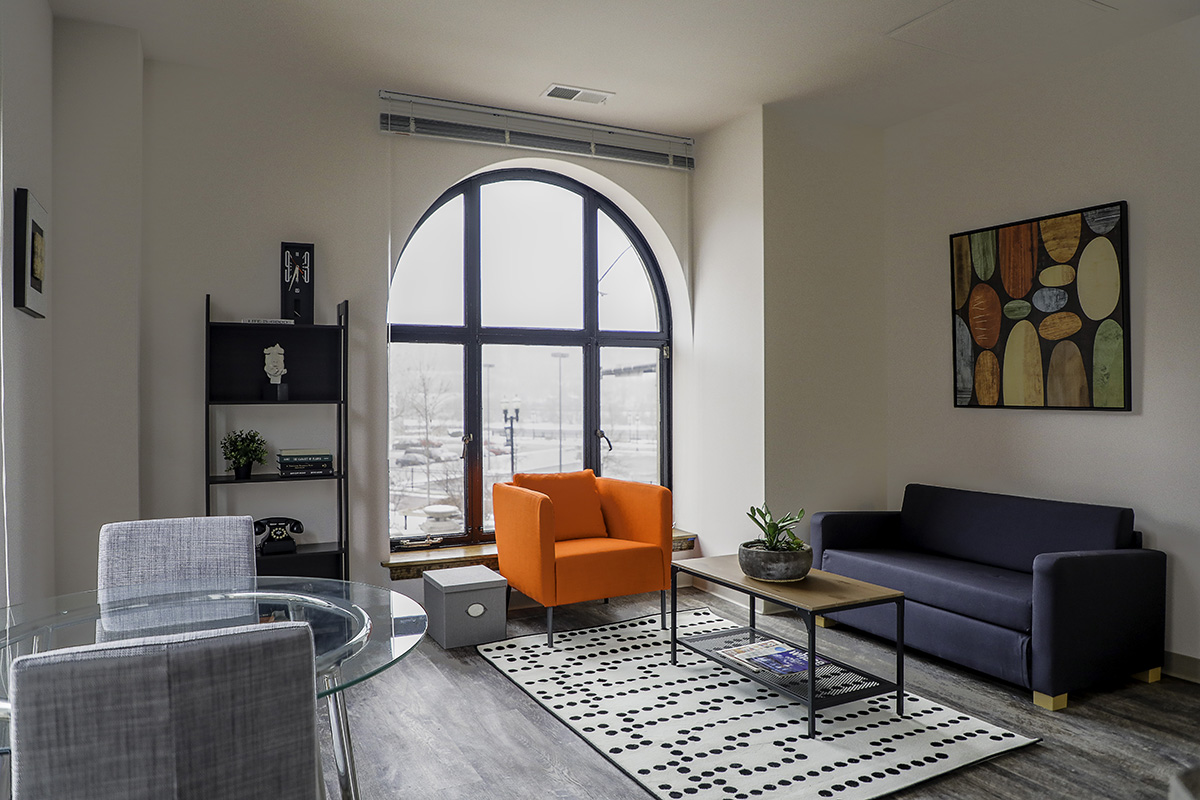
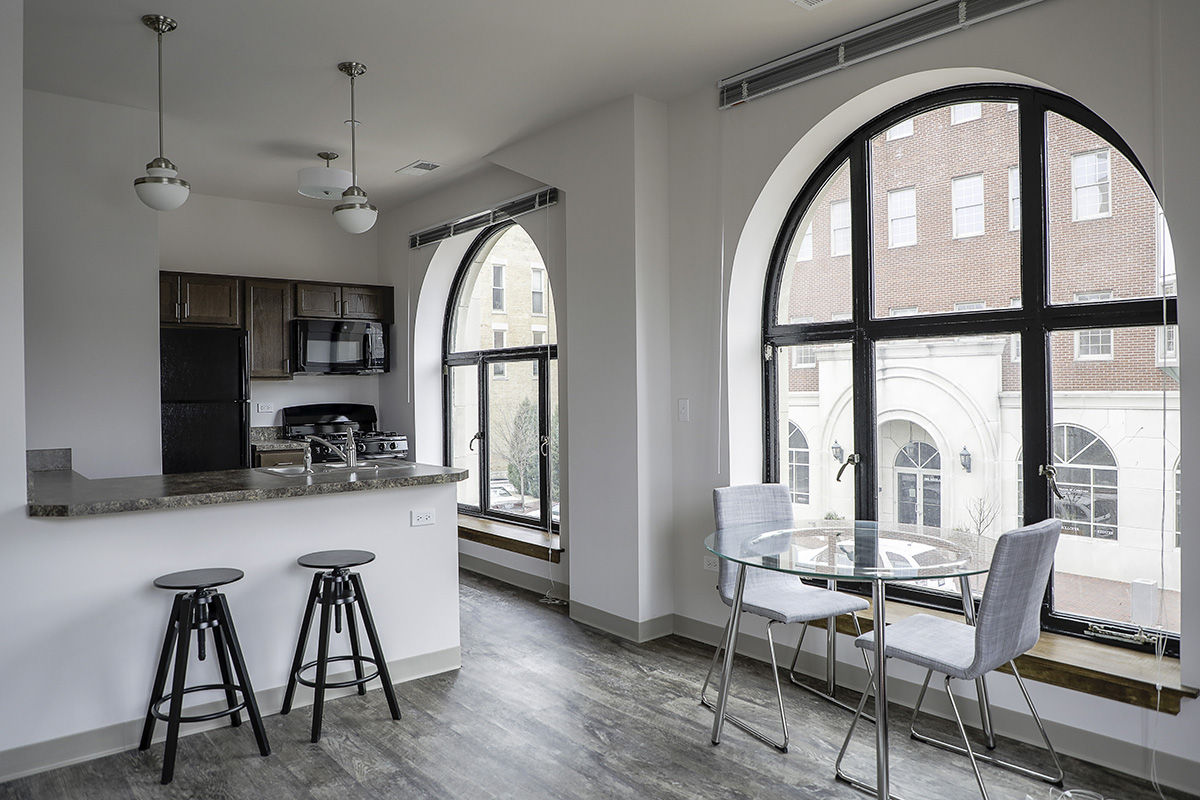
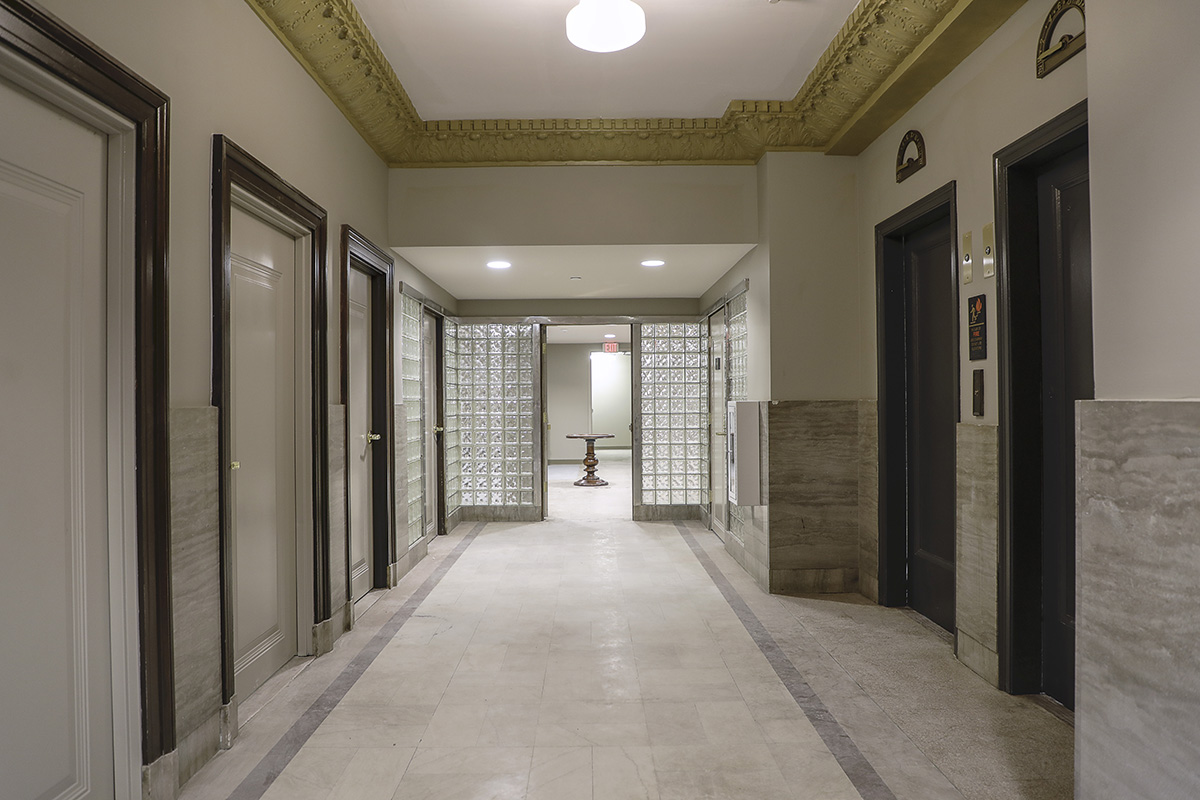
Conversion of the historic downtown Elgin Tower, formerly a bank and office, into a modern apartment building.



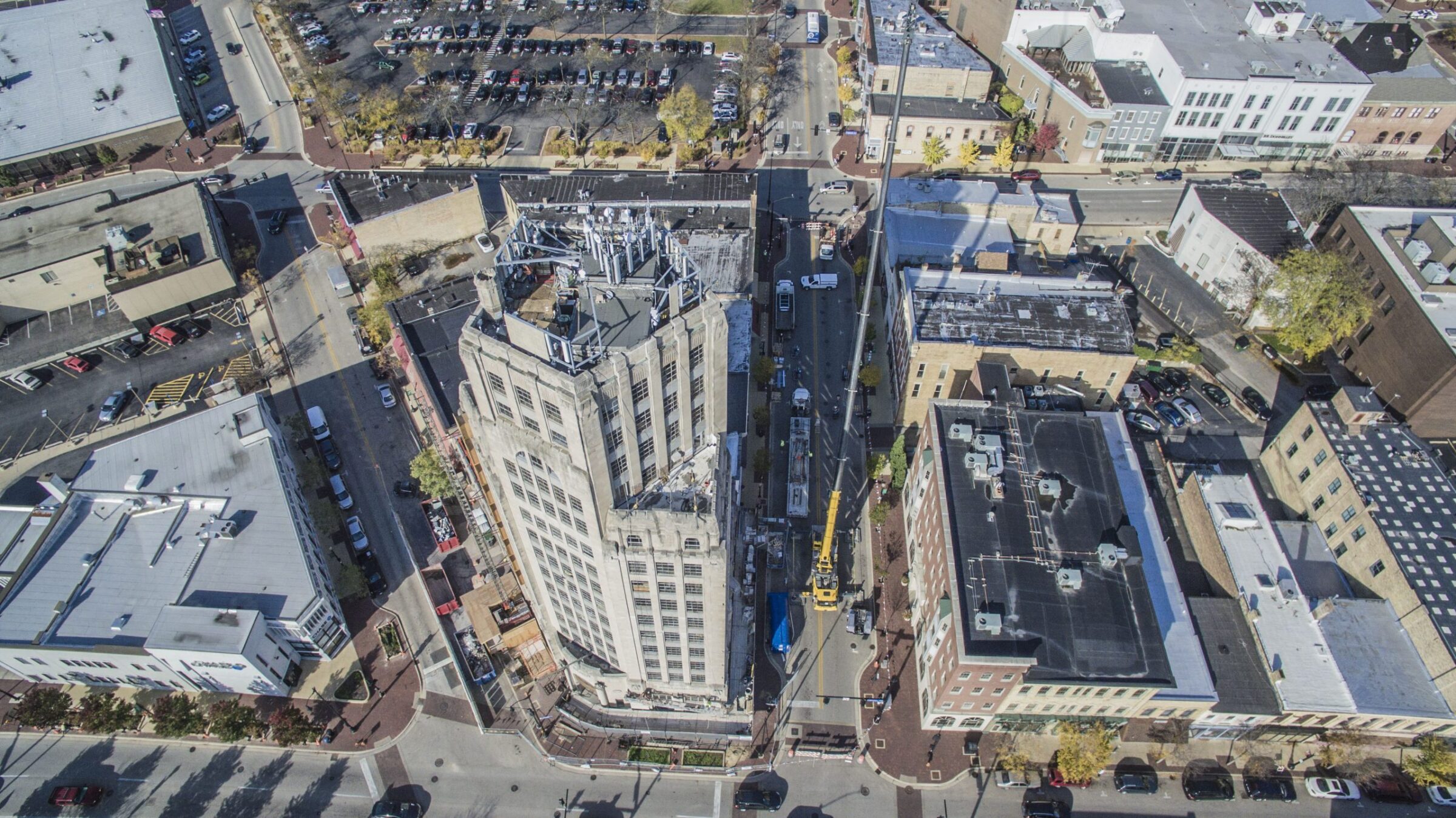
The building faced multiple logistical barriers to construction, including no alley, street facing operations and no loading dock. Permits were needed for repeated street closures, and a hoist was only possible on the outside of the building to floor 11, due to the shape of the building, vaulted sidewalks and proximity to the street. All materials and supplies used on floors 11 through 15 required hand carrying, delivery and installation as no elevators or hoist could access those levels.
Demolition included the removal of old coal fired boilers and radiators to update the building with energy efficient water heaters on the 15th floor and individually controlled fan coil units within each apartment.
The most difficult historical preservation element of the project involved replacing windows on 13 floors. Because the work was exterior facing, full window replacement required a 45- to 60-day approval process at both state and federal levels with the landmark commission. The long lead time required for the windows was due to the unique customization to match existing window profiles, a process that extended review cycles to ensure exact, detailed replication.
Window submissions were rejected repeatedly, causing multiple readjustments to the project schedule. Delayed through the winter, construction continued year-round with the old, broken windows remaining in place to maintain the project schedule. There was neither heat in the winter months nor air conditioning in the summer months for the project teams. Once the replacement windows were finally approved and installed, exterior drywall was put in place – the final task in most rooms prior to finishes. This required close monitoring of the installation requirements for the installed products to ensure the final product quality was not at risk.
Additional reconstruction challenges included rebuilding the elevators, installing a sidewalk lift for freight access to the basement, waterproofing the basement due to significant water damage, and realigning risers for plumbing to upper floors due to building tolerances and existing beams, offsets and different structures between floors.
Both elevators in the building were rebuilt in the exact specifications of the original elevators, which were unusable following a fire caused by arson in 2014. New stairwells were cut, one between floors 1-3 and one between floors 11-14 for egress. The stairwell from floors 11 to 14 required cutting a square opening and due to the age of the building and existing conditions, the floor layouts did not lineup. This caused multiple overcuts and extensive re-engineering of additional steel to avoid cutting into existing concrete beams.
All of the project challenges were met head-on by the collaborative, solutions-oriented project team, and the result is the completion of a landmark project that marks an important cultural signifier for the city of Elgin.